Key Trends for Residential Real Estate

The key trends for residential real estate in 2025 include interest rates, inflation, increased supply, stagnant sales, rising costs, and sidelined buyers. Housingwire says “Two structural forces have reshaped the market over recent years: mortgage rates and inflation. The 30-year mortgage rate closed 2025 at 6.2%, well above the 4.8% 10-year average and a sharp contrast to the 3.9% average that prevailed from 2016 through 2020”.
Source: https://www.housingwire.com/articles/case-shiller-december-growth/
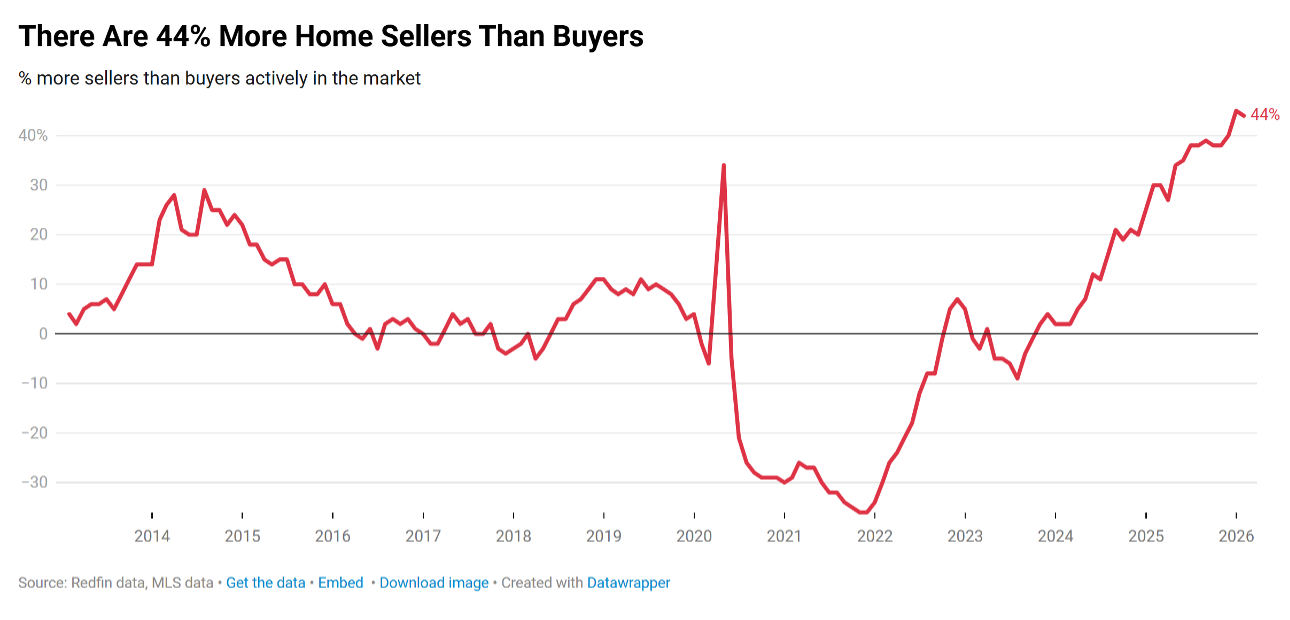
Another structural shift is from a seller’s market to a buyer’s market. There were an estimated 44% more home sellers than buyers in the U.S. housing market in January. This shift is up from 30% more than a year earlier and represents the second largest gap in records dating back to 2013. The largest gap was in December 2025, when sellers outnumbered buyers by 45%. There are 600,000 more home sellers than buyers, giving buyers negotiating power.
While fixed-rate mortgage rates are projected to stay elevated at 6+%, homebuilders are continuing to offer rate buydowns, in which they pay a sum upfront to help lower the buyer’s mortgage rate, in a bid to clear their inventory. “We think this could be enough, along with a rising wealth effect, to shift demand higher while supply increases subside. Consequently, we expect home prices to stall at 0% nationally in 2026,” observed John Sim, head of Securitized Products Research at J.P. Morgan.
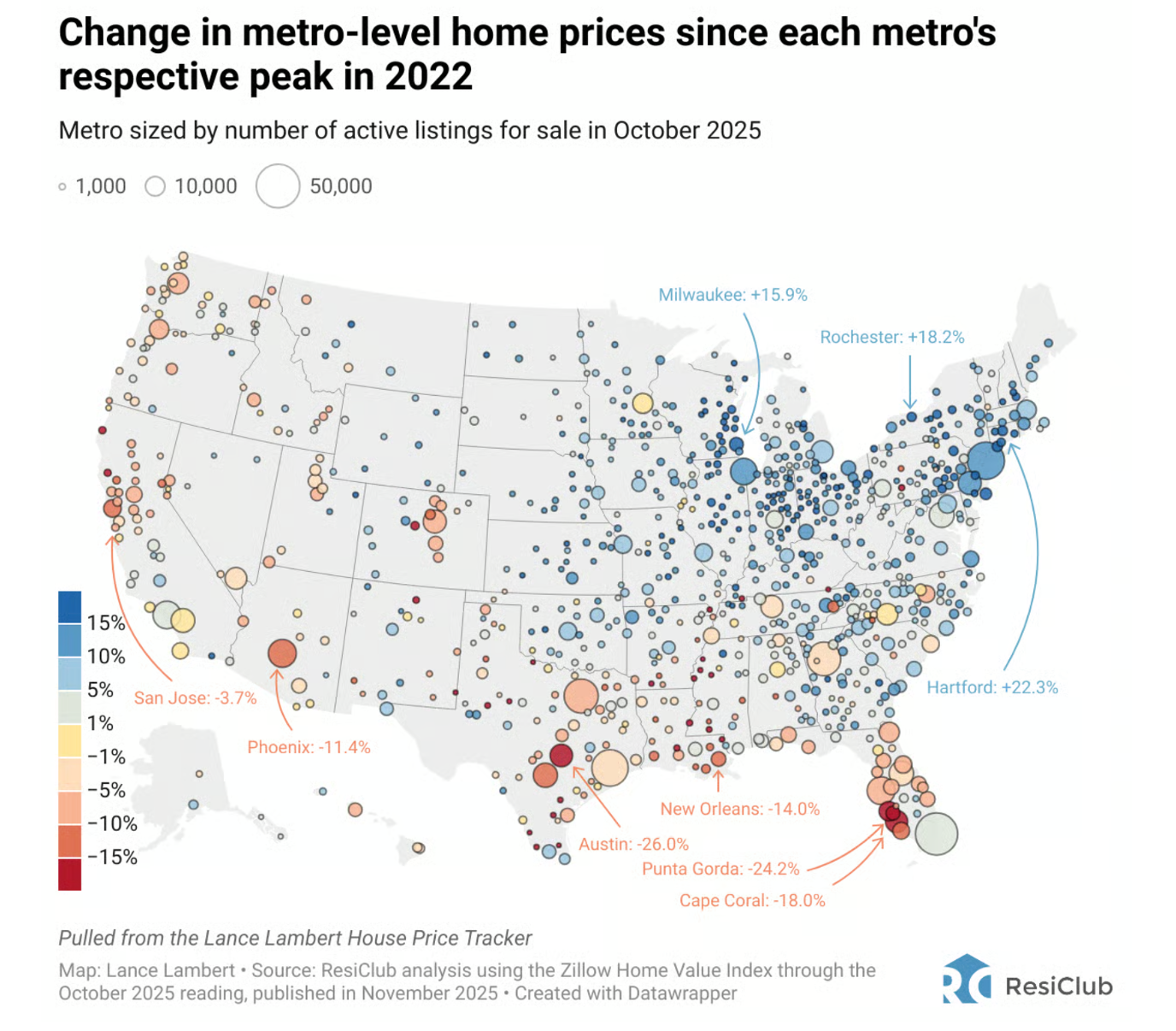
There are, of course, regional variations. House prices are falling the most along the West Coast and Sun Belt where there remains a glut of new homes following the pandemic-era construction boom. “It should not be a surprise that supply is a key factor in areas where we see home prices decline,” Sim said.
Nationally, and in our local markets, inventory has outpaced demand at a level that has not been seen in many years. This inventory gives buyers negotiation power and also highlights the market concerns of affordability and job uncertainty.